

In search of submerged sites
In the dim light beneath the calm surface of several Swiss lakes lie submerged villages with churches, stables, homes and bathhouses. They were not flooded as the result of a disaster – but were intentionally submerged. The affected populations moved their settlements to higher locations, or found new homes in different places. Three of these places tell their stories.

The Wägital
Although the Wägital had been mooted as a location for a reservoir since 1885, the project only started to take concrete shape during the First World War, when Switzerland became acutely aware of its heavy reliance on coal imported from abroad. The Cantonal Parliament of Schwyz unanimously decided to award the licence for the plant and to draw up a plan for the relocation of the local population. It was only partially carried out. Around 40% of the people who had lived in Innerthal in 1920 had to seek a future outside of the valley.
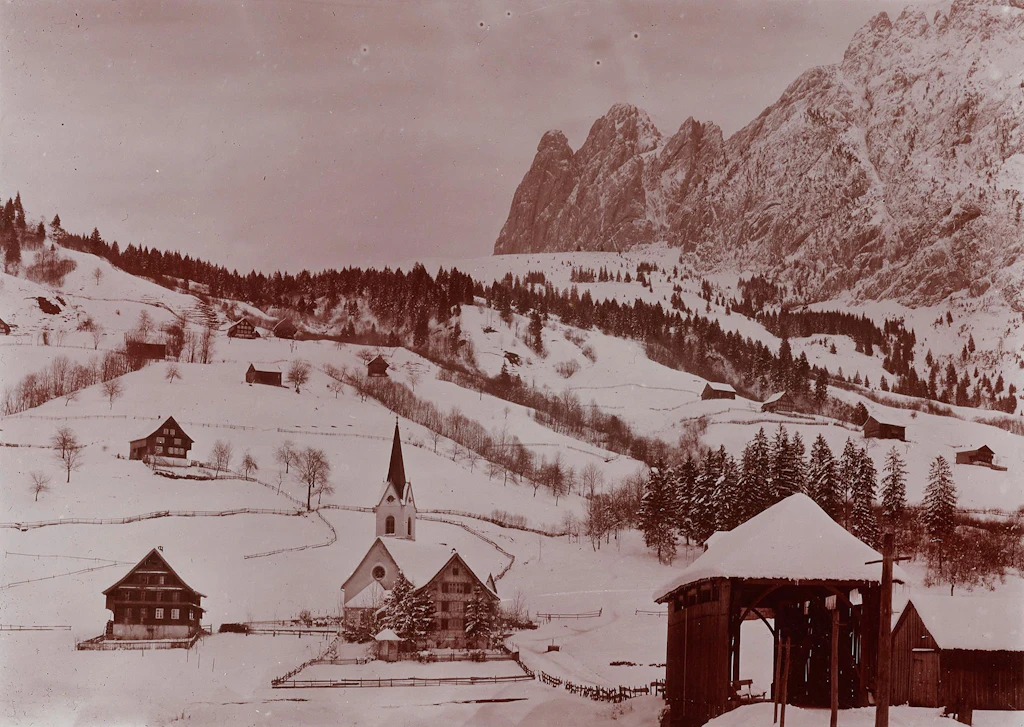
A number of farmhouses were dismantled and re-erected on higher ground. Many central buildings in the village could not be preserved and were submerged when the two dams Schräh and Rempen were completed and caused the lake water level to rise.
Marmorera
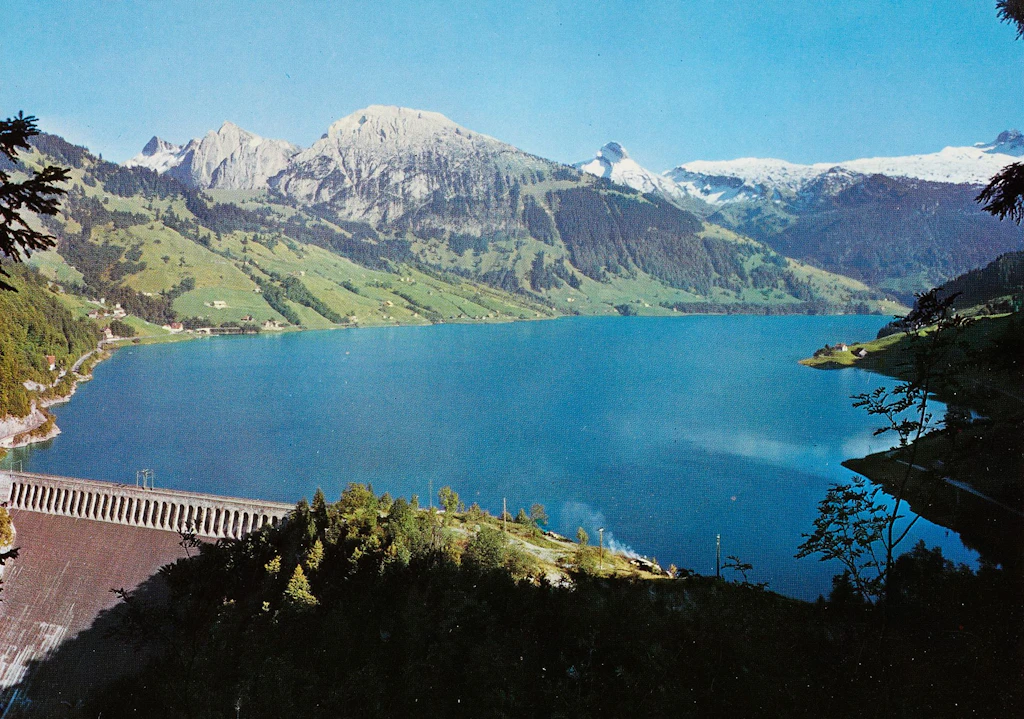
Anyone travelling from the Julier Pass to Savognin passes Lake Marmorera. It too has a submerged village lying hidden beneath its surface. When the Zurich power utilities were looking for a site to expand the Julia works between 1945 and 1948, they opted for this valley in Graubünden. Following lengthy and difficult negotiations, which in some cases took place under pressure and under dubious conditions, most land owners signed.
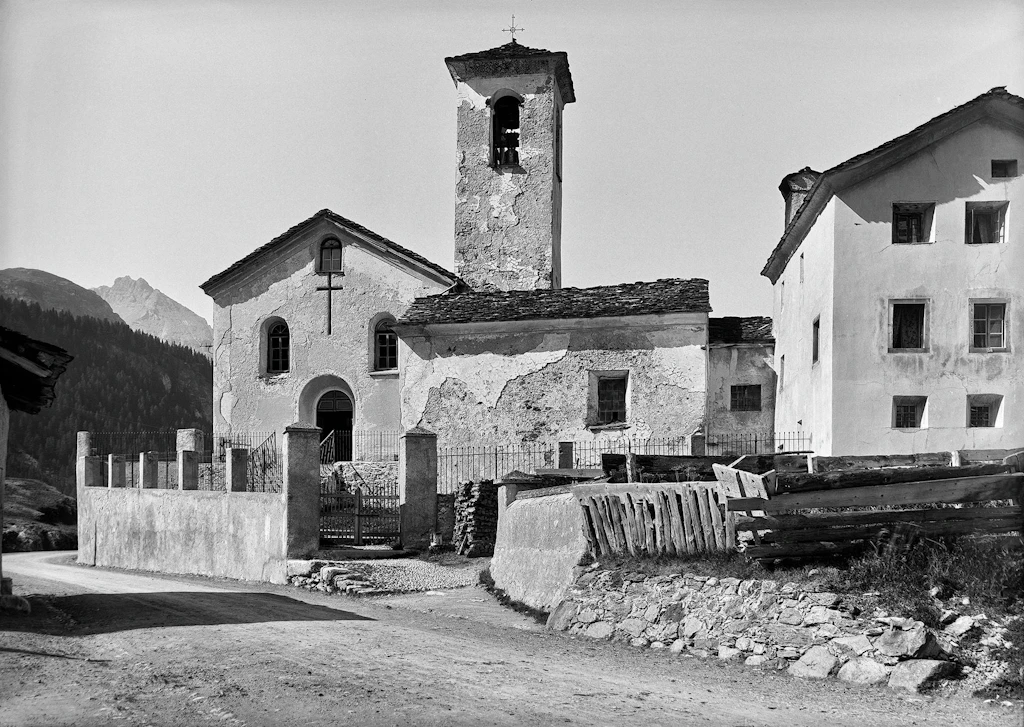
Because they didn't have the right to vote at the time, women who owned property were not involved in the process. The last two landowners who opposed the plans ended up being expropriated. In 1954, the church, 29 homes and 52 stables disappeared under the floodwaters. The village's residents and its dead got a new home higher up.
Bad Bonn
Today, the name ‘Bad Bonn’ calls to mind the annual ‘Bad Bonn Kilbi’ music festival, or the former West German capital. But in fact ‘Bad Bonn’ refers to a famous former spa, whose healing powers had been harnessed since Roman times and which today lies hidden beneath the surface of the Schiffenen reservoir in the canton of Fribourg.
It is difficult to say with certainty whether the name ‘Bad Bonn’ was derived from ‘pons’ (the bridge over the River Sarine), or from ‘aquae bonae’ (meaning 'good waters'). However, there is detailed evidence of the illnesses and ailments that the sulphurous water promised to cure. For example, there is a report dating from around 1760 in which Johannes Schuler reports on the wondrous healing of a young man from Fribourg who was paralysed as a result of rheumatism and who arrived at the Bad Bonn baths. Four days afterwards he was said to be able to walk again, and by the tenth day he was cured.
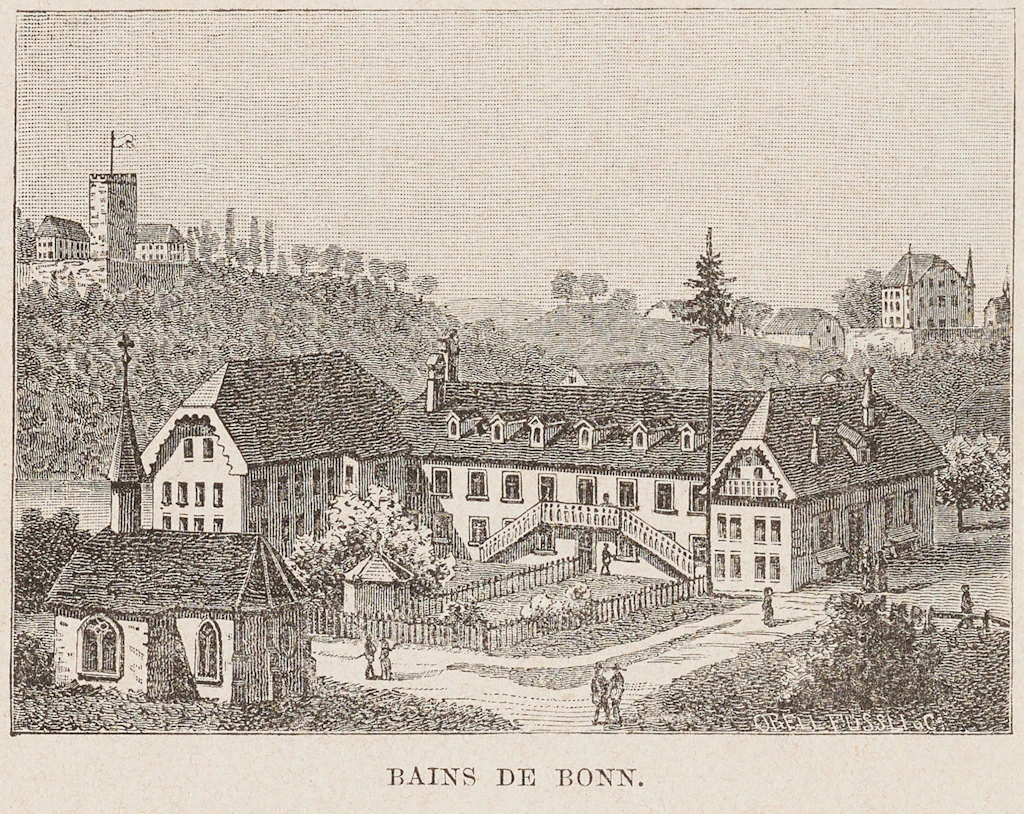
The importance of Bad Bonn as a spa resort is reflected not only in the many reports of its alleged healing power, but also in the efforts of the authorities to regulate bathing activities there. For example, in the 17th century; Fribourg city physician F.P. Dugo drew up detailed instructions on preparing for a spa cure and on how to behave while there. The baths were long held in high regard: in 1823 the site was even proposed by the Fribourg government as a potential location for the planned cantonal hospital. It was only later that the site started to gradually lose importance.
The impressive property, featuring halls, baths, dining facilities and its own chapel was used as a set for the filming of Franz Schnyder's ‘Anne Bäbi Jowäger’ in 1960. Three years later it was demolished and flooded.

Bibliography and sources
- Aebischer, Leo, Baeriswyl, Mario, Strasser, Olivia: Schiffenensee. Das versunkene Saanetal. Verein O.S.K.A.R; Schmitten, 2011.
- Bäder von Bad Bonn, Artikel zur Wiedereröffnung 1885. Freiburger Nachrichten, 9. Mai 1885.
- Bösch, Paul; Florin, Jon Andrea: Albula, Julia und Zürich: 100 Jahre EWZ in Mittelbünden. Sils im Domleschg: EWZ, 2006.
- Dugo, Franciscus Prosper: Fons Aquae bonae. Friburgi Helvetiorum 1662. Deutscher Geschichtsforschender Verein des Kantons Freiburg; Freiburg 1993.
- Durband, Gion Matthias: Marmorera - der Untergang eines Dorfes. Bündner Tagblatt, 22. November 2025.
- Horat, Erwin: Innerthal – Ein Stausee verändert die Gemeinde. In: Mitteilungen des historischen Vereins des Kantons Schwyz (100). Schwyz, 2008.
- Mark, Paul J.: Ein Bergdorf geht unter. Das Schicksal von Marmorera. Terra Grischuna, Chur, 2005
- Pfister, Andreas: Diplomatie am Bau: Die Realisierung des Wasserkraftwerks im Wägital 1895-1926. Marchring, Kulturhistorische Gesellschaft der March, Lachen 2013.
- Schueler, Laurent-Bernard: Merkwürdige, in den Jahren 1750-1780 durch das Bad Bonn bewirkte Heilungen beobachtet und beschrieben / von Dr. Schueler. Freiburg; 1888.
- Untergang von Bad Bonn (3) | MEMOBASE von Memoriav
Swiss National Library
User services
Monbijoustrasse 74
3003 Bern