
Empa Entrepreneur Fellowship awarded: Climate-friendly gasoline for today’s cars and fuel stations
Dübendorf, 24.03.2026 — Reducing emissions from road transport remains one of the major challenges on the path to climate neutrality. While electric mobility is increasing its market share, millions of vehicles with combustion engines that rely on gasoline will remain in use for many years to come. Empa researcher Alessia Cesarini is developing a climate‑friendly gasoline that could reduce emissions immediately – without replacing cars or refueling infrastructure. For her work, she has recently been awarded the Empa Entrepreneur Fellowship.
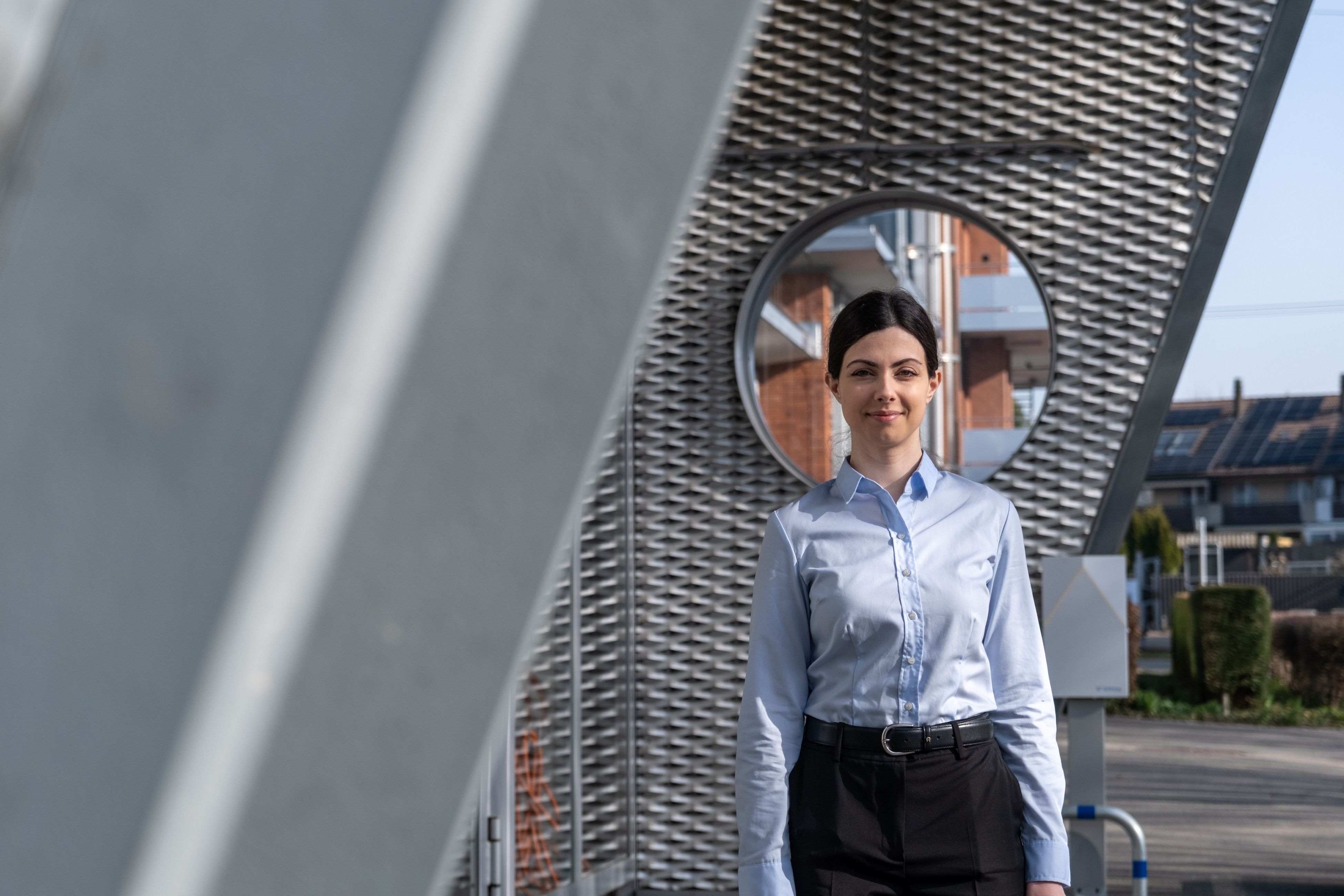
With this fellowship, Empa supports researchers who strive to turn their scientific findings into marketable products and viable business models. Cesarini convinced the jury with the high level of technological innovation and a clear strategy for gradually bringing the technology to market together with industrial partners.
“To date, my career has been a dedicated progression from scientist to entrepreneur,” says Cesarini. “This project builds on my research on catalysts for synthetic fuels and my vision of making CO₂‑neutral mobility economically viable. The goal is a solution that works with existing vehicles and infrastructure – sustainable both environmentally and economically.”
A new fuel for existing engines
At the heart of the project is a chemical process called oligomerization, which converts renewable molecules such as ethylene or propylene into a liquid fuel closely resembling conventional (fossil) gasoline. A key element of the technology is a patented family of catalysts developed by Cesarini. These catalysts make the process highly efficient and help keep energy consumption low. The synthetic fuel already reaches an octane rating of 95, a key benchmark for conventional gasoline, and initial estimates suggest that it could be cost-competitive with fossil gasoline once produced at industrial scale.
A laboratory demonstrator with a production capacity of 10'000 liters per year is already in operation. In the next phase, the technology will be further optimized, scaled up and implemented at Empa's move mobility demonstrator to validate reliable production under real-world conditions and prepare the way for industrial implementation.
From the laboratory to the market
The market launch is planned step by step. The first pilot application is expected in the forestry sector, where the fuel can be tested in practical operation. In a later stage, larger quantities are to be supplied to local fuel distributors. The main advantage of this innovation is its immediate usability: The non-fossil gasoline can be used in the current vehicle fleet and within the existing fuel logistics network, enabling a smooth transition toward lower-CO₂ mobility.
By awarding the Empa Entrepreneur Fellowship, Empa is reaffirming its commitment to promoting innovation and entrepreneurship and translating research results from its laboratories into practical applications that create tangible benefits for the economy and society.
Information
Dr. Alessia Cesarini
Chemical Energy Carriers and Vehicle Systems
+41 58 765 46 26
alessia.cesarini@empa.ch