

A dual legacy: Friedrich Staub and the National Library
At the heart of the Swiss National Library, founded in 1895, is a private collection that fully reflects this national institution's mission while extending well beyond it. It was built up by the Zurich scholar Friedrich Staub – best known as the founder of the famous ‘Schweizerisches Idiotikon.’ Staub not only compiled an extensive collection of printed materials relating to Switzerland, he also initiated the creation of the library, which he wanted to name the ‘central library of Swiss literature’.
By Dr. Isabelle Kirgus
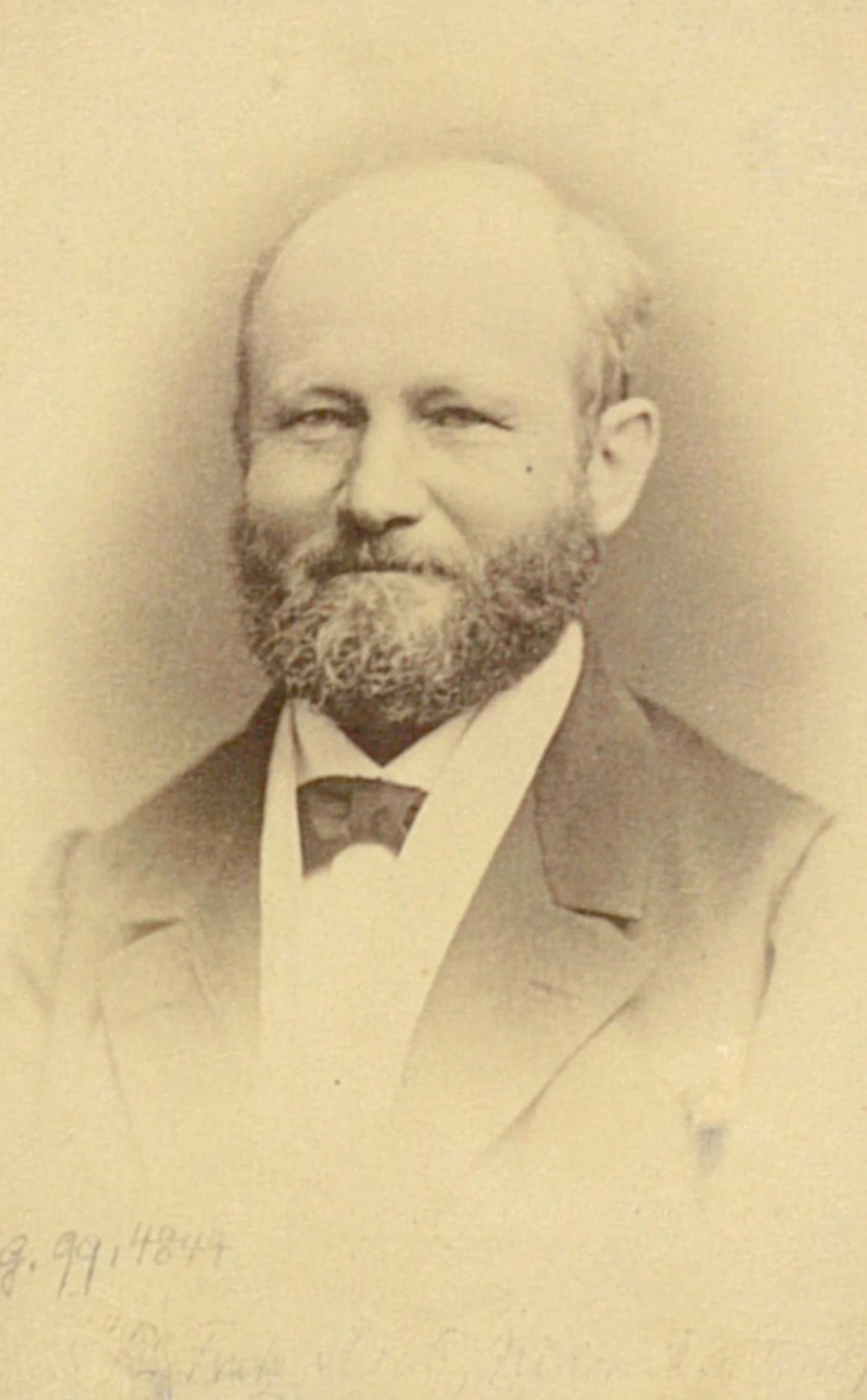
Friedrich Staub – a lover of language
Friedrich Staub (1826–96), whose 200th birthday falls in 2026, was from Männedorf on Zurich's Gold Coast. He was raised in a wealthy industrialist family and studied history and philology in Zurich and Bonn. From an early age, he was interested in Swiss culture, history and in particular Swiss German dialect. Following many years as a teacher at a private boarding school, Staub became employed at the Zurich city library (now the Zentralbibliothek), where he worked from 1871 to 1887. His love of the printed word and of Swiss German led him, from as early as 1862, to embark on the project ‘Schweizerisches Idiotikon’, a dictionary of the Swiss German language, in collaboration with Swiss linguist Ludwig Tobler (1827–95). This lexicographical undertaking, which documents the vocabulary of Swiss dialects, is still ongoing. Staub was editor-in-chief and oversaw the production of four volumes of the dictionary during his lifetime.
Bringing together all written and visual materials on Switzerland
While working on the dictionary, Staub found it laborious to obtain sources as evidence for Swiss German words and their regional variants and this made him aware of a gap in Switzerland. Even decades after the founding of the federal state in 1848, literature on Switzerland was still scattered across the country, if it was collected at all. A few years before his death, on 4 March 1891, Staub therefore wrote a personal letter to the federal councillor in charge of home affairs, Carl Schenk (1823–95), stressing the need to establish a ‘central library of Swiss literature'. At the same time, he also mentioned what he thought the institution should collect: besides literature from Switzerland and abroad that has a link to “our people and our country”, Staub argued strongly for ‘artistic representations’. By this he meant artistic prints depicting Switzerland and its people, in other words, views of places and landscapes, as well as portraits, but also depictions of customs and historical events. He believed that the effect of these visual representations would complement the textual materials. In particular, he saw the joint examination of texts and images on the same subject as an ideal basis for the scholarly study of Switzerland.
The Federal Council submitted this private request to the Commission for Swiss Studies (Kommission für schweizerische Landeskunde) for review. In March 1892, the commission issued the following recommendation: “The Confederation should entrust the Federal Central Library with collecting all printed matter published in Switzerland, including images of all kinds, sheet music, etc., and should provide it with sufficient staff for this purpose” (SFA, E 83 / 1000 / 1162). The federal decree of late 1894 endorsed Friedrich Staub's initiative, paving the way for the creation of the Swiss National Library.
A collection that outgrew its home
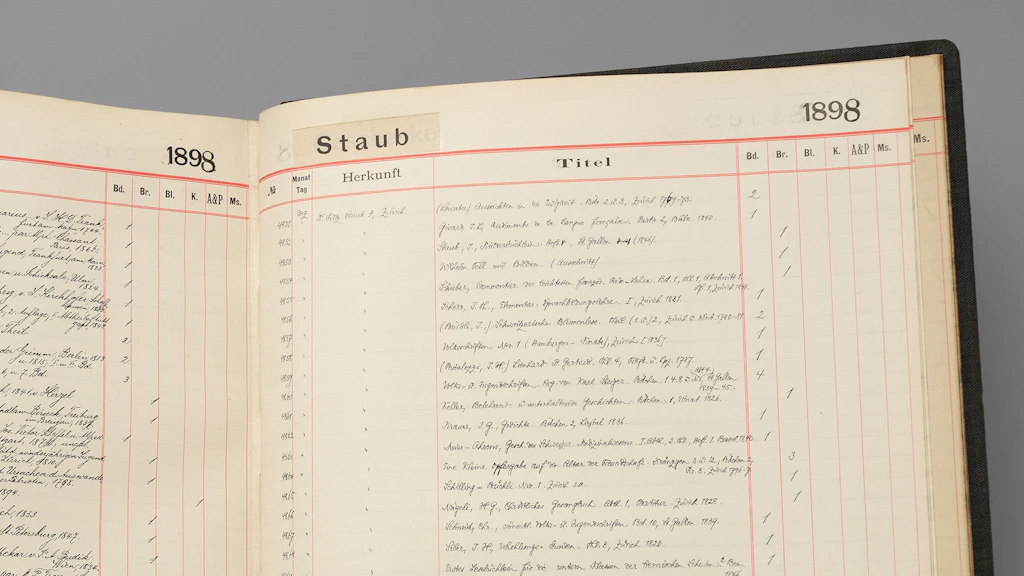
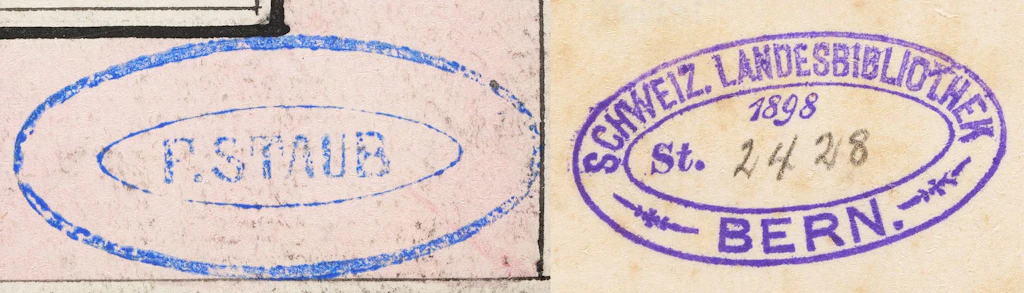
Even in his lifetime, Staub had been eager to see the private collection of Swiss-related literature he had built up over decades incorporated into the Swiss National Library, which had been operating since 1895. By then, the collection also served as a working library for the editors of the ‘Schweizerisches Idiotikon’. Staub died a year after the founding of this institution that he had initiated, but his family were still able to make his wish a reality. In December 1897, at the request of the Federal Council, the Federal Assembly approved the sum of CHF 25,000 for the acquisition of Staub's book and print collection for the National Library. This seems a considerable price, but it was, after all, for nearly 100,000 items. At that time – so in 1898 – in the library's fourth year of operation, all the printed materials it had acquired up to that point also totalled 100,000 items (according to the 1897 annual report). The purchase of the Staub collection thus doubled the number of holdings and therefore led to major staffing problems in processing them – a task that was started in 1898. Meanwhile, the first site of the Swiss National Library, a four-room apartment at Christoffelgasse 7 in Bern, was unable to accommodate such a rapid growth in the collection. It wasn't until the autumn of 1900 that the situation eased, when the National Library moved to its first newly constructed premises on Archivstrasse, the current site of the Swiss Federal Archives.
A treasure trove of texts and images
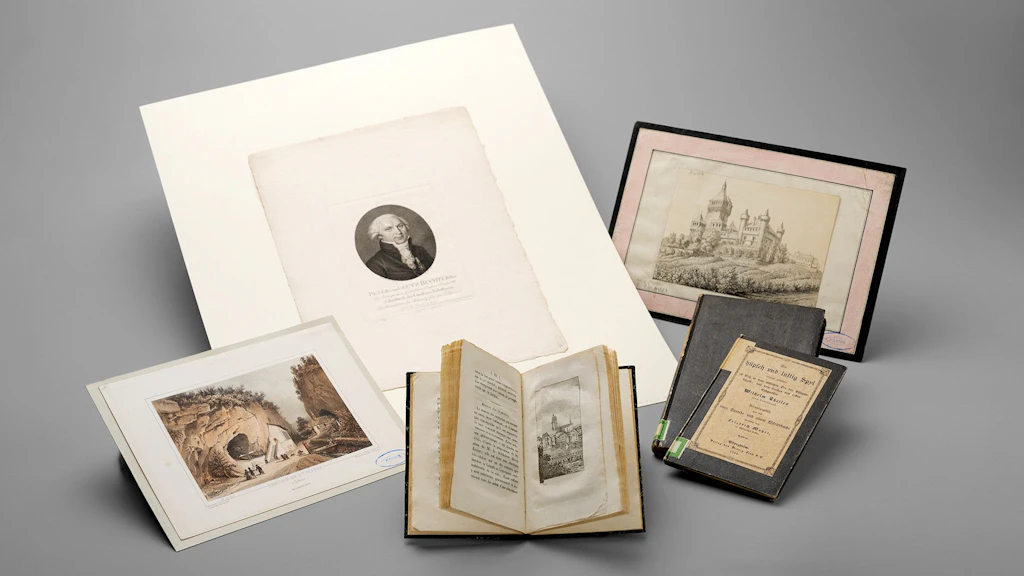
In addition to around 22,000 printed materials relating to Switzerland (books, brochures, periodicals, association journals), whose acquisition is easy to understand for a national library, it is surprising that Staub's collection – comprising 100,000 items – also included around 73,000 ‘single sheets’. This category included prints depicting views and panoramas, portraits of Swiss people, images of Swiss traditional costume, festivals and parades, but also historical representations and caricatures. A visual treasure trove, which became part of the National Library's core collection and was in keeping with the recommendations of the founding commission. In the library's collection mandate, which was first set out in the ‘Federal Act on the Swiss National Library’ in 1911, visual items relating to Switzerland were no longer included. Nonetheless, the Swiss National Library now has the Prints and Drawings Department, which, on the basis of the National Library Ordinance of 1998, continues to promote and preserve Switzerland's visual cultural heritage – and is therefore implicitly dedicated to Friedrich Staub's legacy!
A dual legacy
Through the acquisition of Staub's private collection, combining textual and visual items of Swiss cultural heritage, the wish of this visionary philologist and librarian was posthumously fulfilled. Friedrich Staub therefore left his mark twice on the history of the Swiss National Library: as its initiator and – in material terms – through his extensive collection of written and visual works, which form the basis of the Swiss National Library – a repository of knowledge that now comprises several million items.
Bibliography and sources
- 'Gründung einer schweizerischen Nationalbibliothek: Vorbereitendes Material', dossier in the Swiss Federal Archives (BAR, E 83 / 1000 / 1162)
- Schweizerische Landesbibliothek: Dritter Jahresbericht 1897
- Schweizerische Nationalbibliothek - 125 Jahre = Bibliothèque nationale suisse - 125 ans = Biblioteca nazionale svizzera - 125 anni = Biblioteca naziunala svizra - 125 onns / Edited by Swiss National Library; editorial team: Cathy Strahm (NL), Hannes Mangold (NL), Bern: 2020
- Walter Haas: Das Wörterbuch der schweizerdeutschen Sprache. Versuch über eine nationale Institution. Edited by the editorial team of the Schweizerdeutsche Wörterbuch (Swiss German dictionary), Frauenfeld: Huber, 1981