

In search of bathing bliss
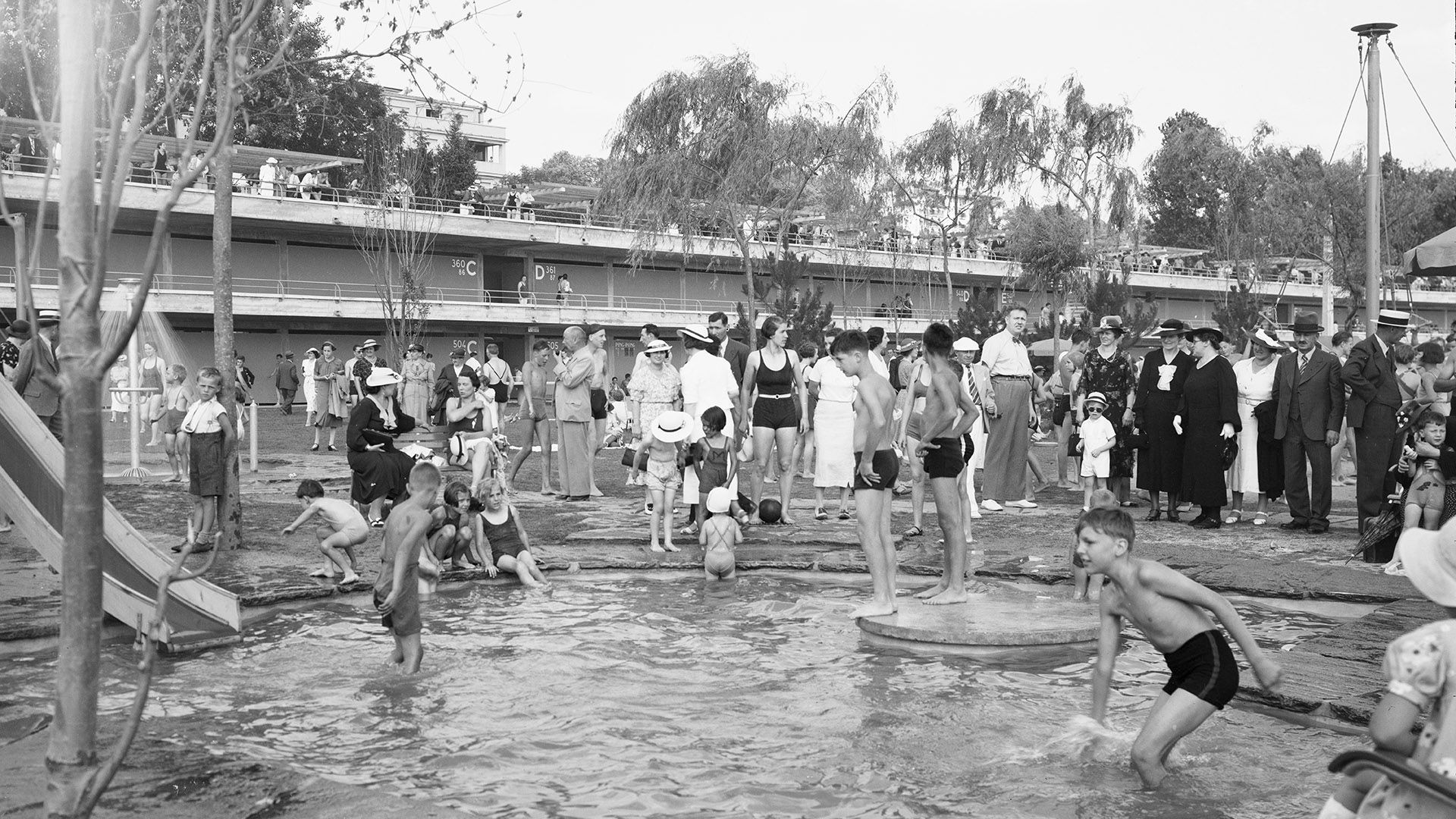
Switzerland is rightly considered the ‘land of lidos’ with its 600 open-air swimming spots that invite people to plunge into the usually chilly water. For many people, their lido is much more than just a place for bathing – it’s a summer institution and has long been part of Switzerland’s everyday life and leisure culture. And yet, this tradition is surprisingly recent.
_1920x1080.jpg?w=1024&auto=format)
“The lake smiles, inviting you to bathe” … not quite yet
If he were alive today, Friedrich Schiller would probably have shared these famous words against an appropriate backdrop in the style of a modern influencer via his social media channels – after all, there could hardly be a better advertising slogan for Switzerland’s bathing culture. However, when Schiller’s drama ‘William Tell’ was performed for the first time in 1804, Switzerland’s lakes were far from being the dream destinations for swimmers and sun worshippers that they are today.
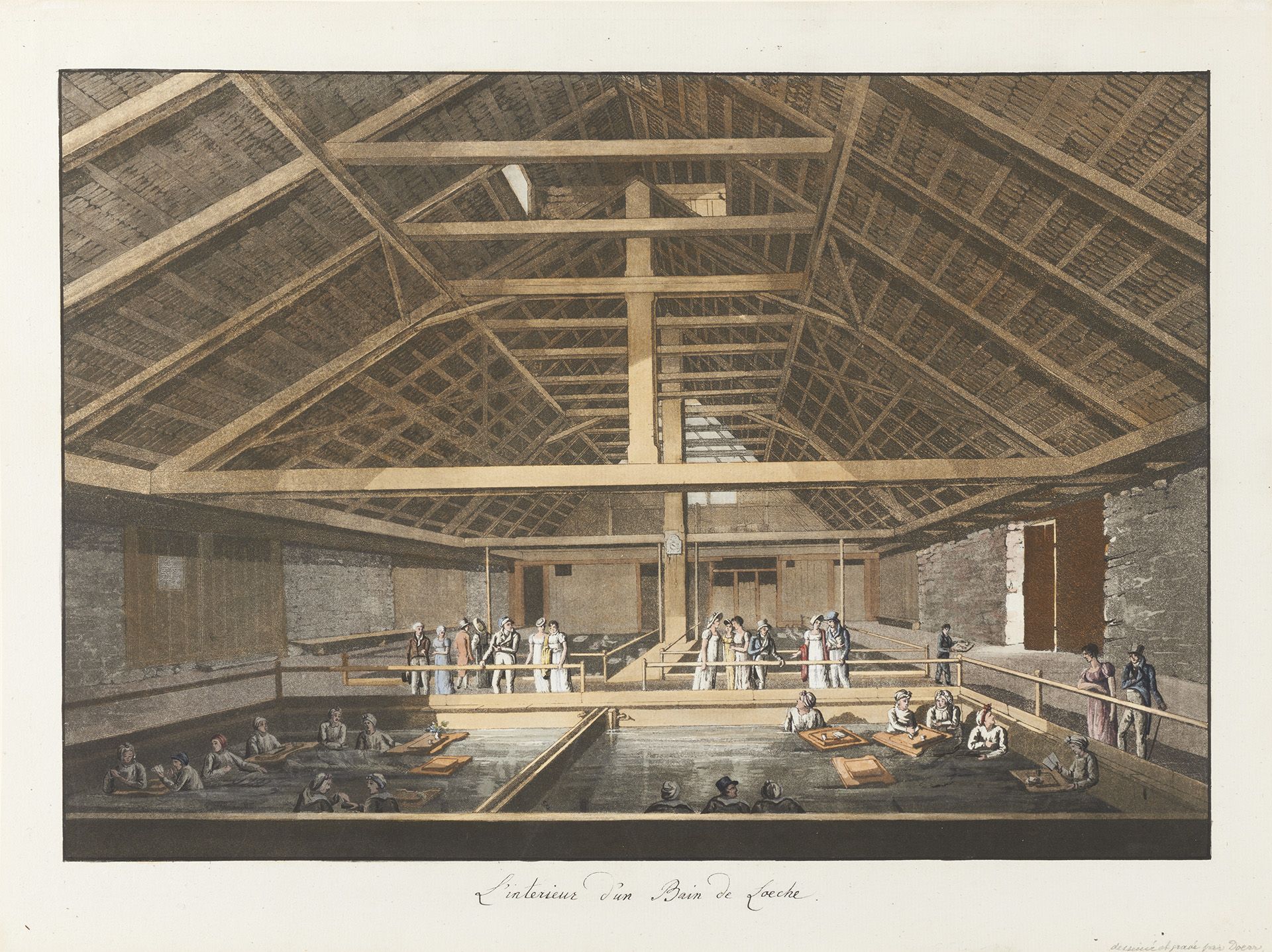
At that time, untamed nature was still considered a latent threat in some places. Since Romanisation in the 1st century AD, people had therefore mainly bathed in protected areas, for example in the thermal baths of Aventicum (Avenches). This bathing culture influenced by the Romans continued unabated for centuries. It even experienced a boom in the Renaissance, as evidenced by the Humanist Poggio Bracciolini who in 1416 described the bathing culture of Aargau’s baths in detail, highlighting the extent to which civilized, communal bathing was still popular.
Whether they were heated using firewood or natural thermal springs – warm baths established themselves as lively social meeting places and remained so for centuries. The famous spa resorts experienced their greatest – and, at the same time, final – heyday as medical and tourist destinations in the 19th century.
_1920breit.jpg?w=1024&auto=format)
From thermal baths to box baths
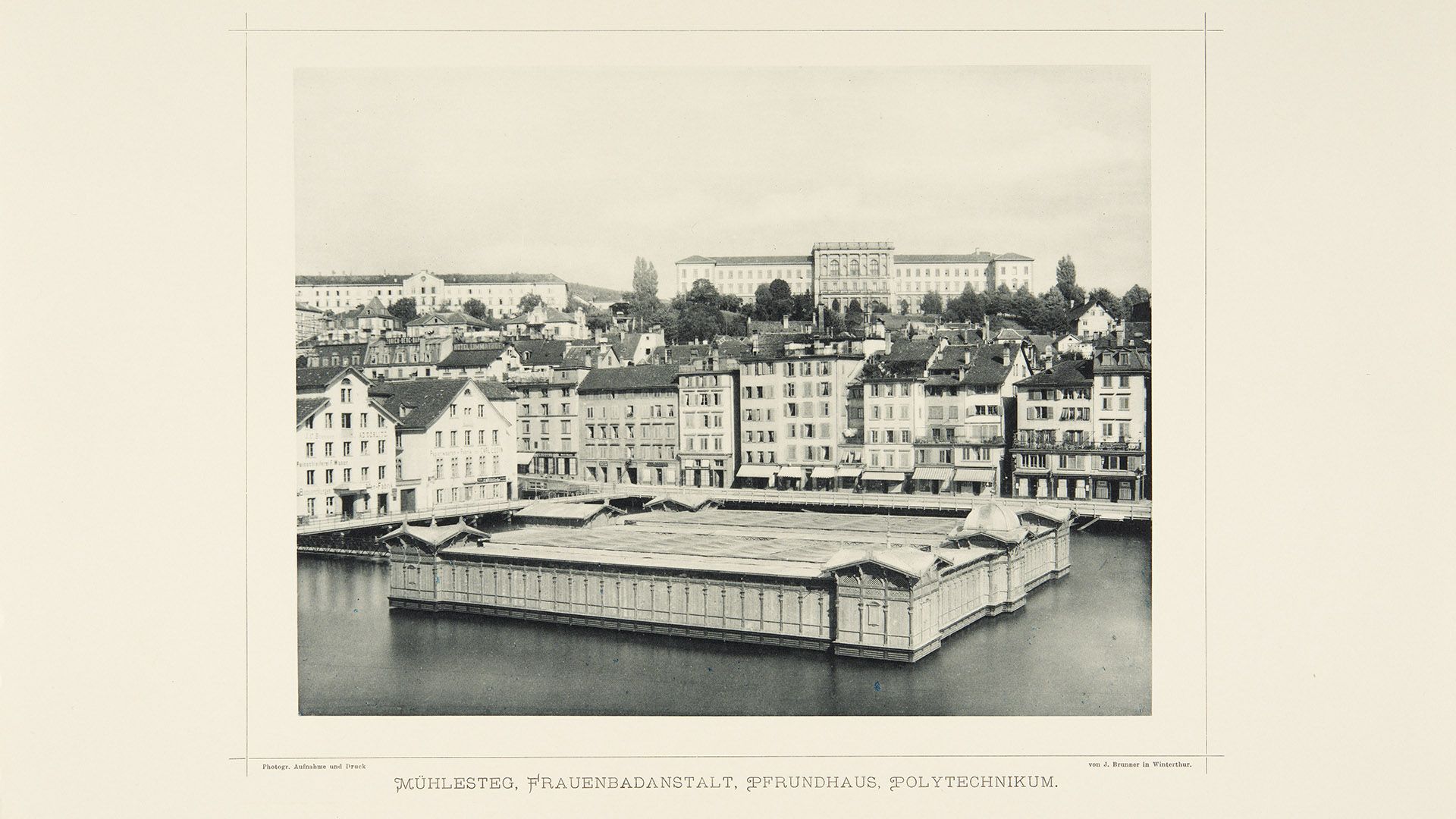
The advent of the box bath in around 1860 brought new bathing opportunities to the cool waters of rivers and lakes in several towns and cities. In Zurich, the Stadthausquai women’s pool was opened in 1888 – a remarkable step as until 1837 it had been prohibited for women to bathe in public at that spot. The rudimentary wooden sheds protected bathers from prying eyes and prevented drowning. However, the growing urban population primarily used them as an opportunity for washing due to a lack of private bathrooms.
_1920x1080.jpg?w=1024&auto=format)
Heading for new shores – the changing face of bathing culture
After the First World War, the classic, time-honoured spa tradition soon lost relevance. Extensive social upheaval paved the way for new bathing customs. Swimming in open waters was practiced for enjoyment and as part of an active lifestyle. The same was true of heading to the lake shore to sit in the blazing sun – something that had been largely incompatible with social conventions and beauty ideals pre-1914. But from 1919, society was noticeably changing. The Lido Weggis was the first mixed-sex lido to open in Switzerland. For many, this symbolised a break with the past, and for others an affront against established mores. The new baths quickly became known mockingly as the ‘Schandbad’ (‘baths of shame’) – reflecting the extent to which notions of public space, the body and leisure were changing.
_1080breit.jpg?w=1024&auto=format)
New baths – new ways of bathing
The growing interest in public lidos drove the construction of new bathing facilities and the expansion of existing ones in the inter-war years. While the Lido di Lugano was realised as an intricate wood-frame building in 1928, reinforced concrete structures increasingly became the norm. These new structures were often designed by an emerging generation of architects who subscribed to the ‘Neues Bauen’ architectural style and the ideas of Le Corbusier.
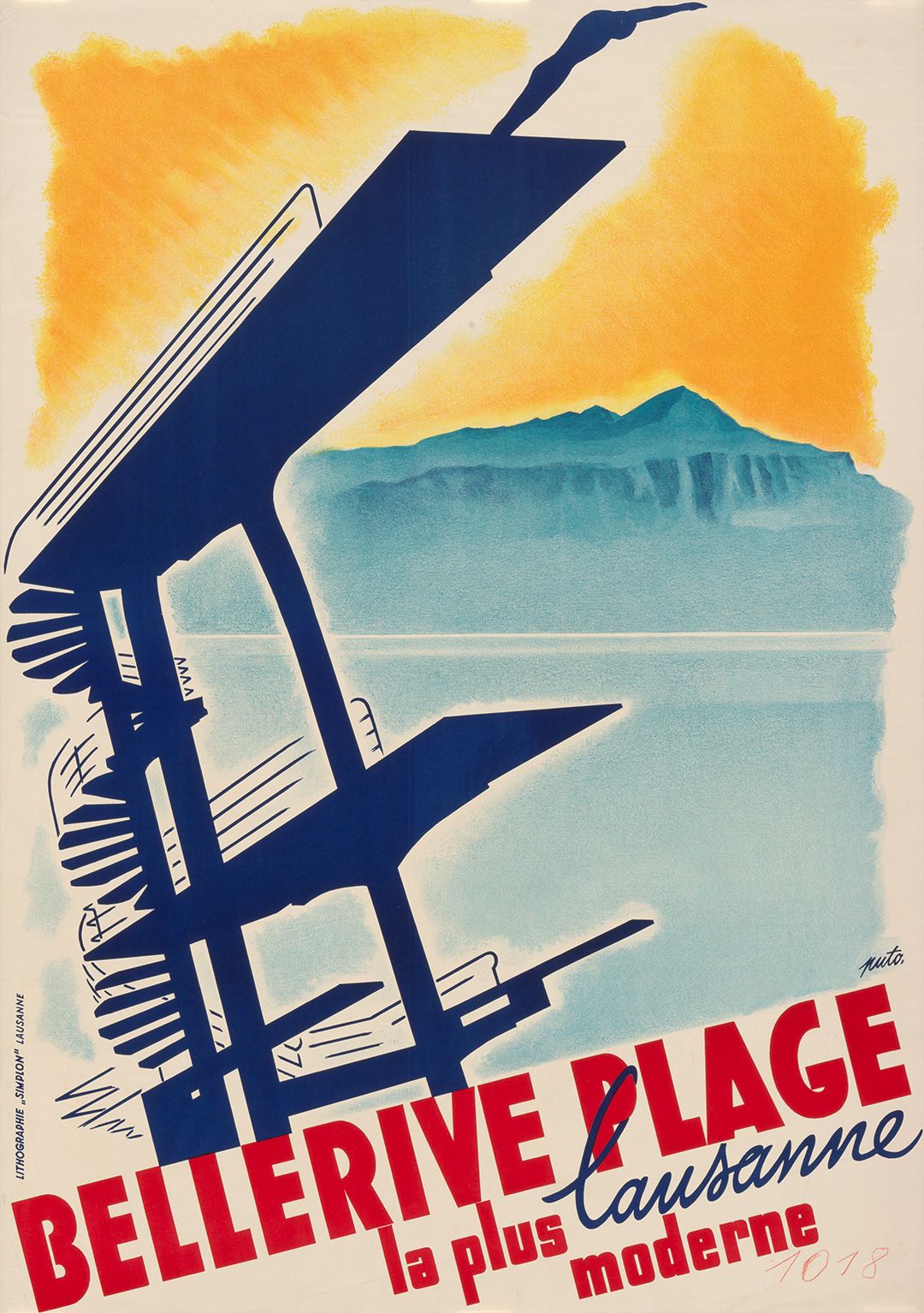
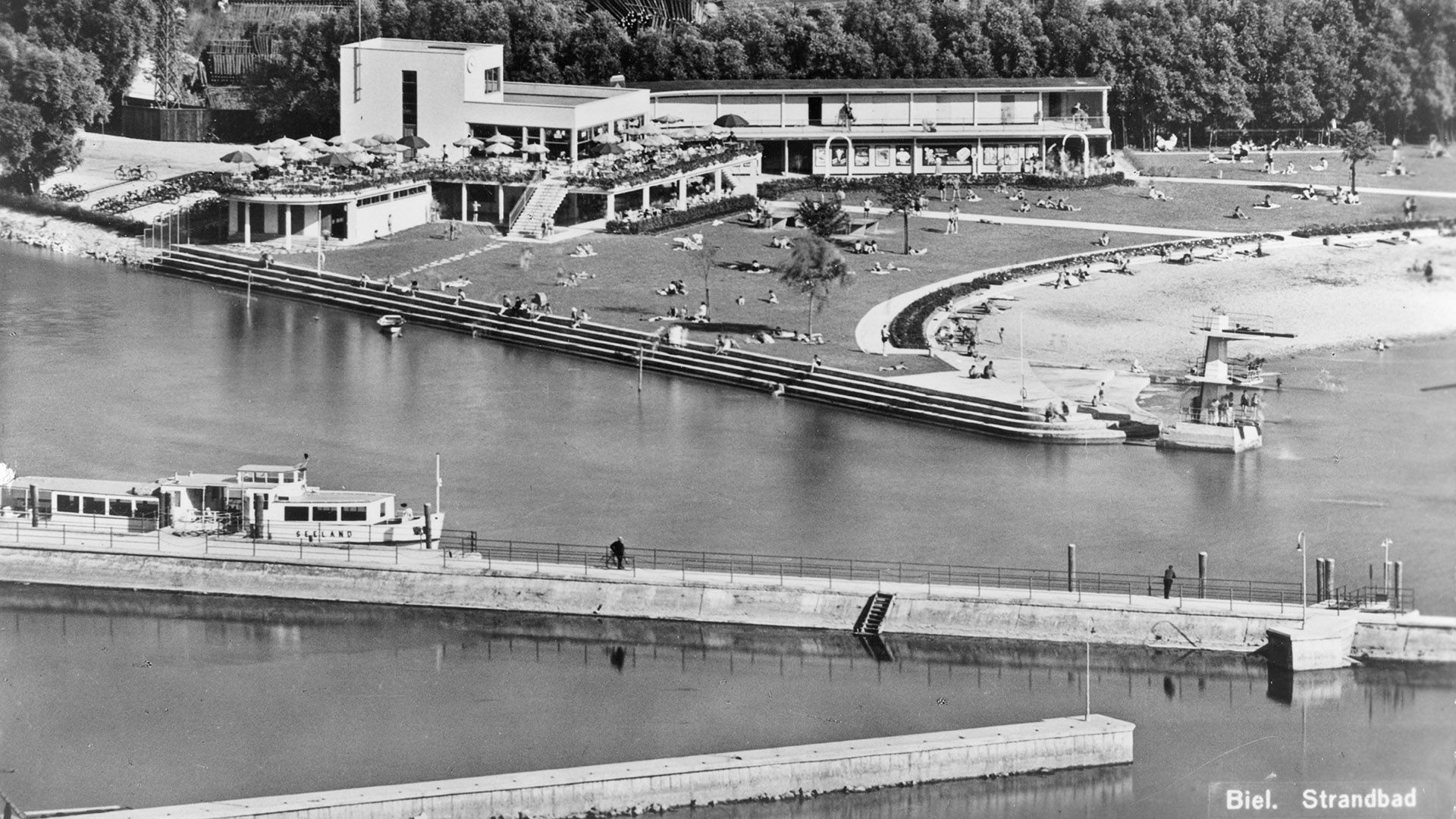
Examples are the lidos in Biel/Bienne (1932), Arbon and Thun (both 1933) with their elongated, flat structures. The new lido at Bellerive Plage in Lausanne (1937) also featured a maritime aesthetic. The modern facilities provided changing rooms, lawns for sunbathing, restaurants and diving platforms.
_1920x1080.jpg?w=1024&auto=format)
All sunshine and unspoilt bathing bliss?
The Second World War only interrupted the lido’s success story temporarily. In the course of the post-war economic boom, many new bathing facilities were built and existing ones modernised, particularly in the 1960s. Swimming pools that were partitioned off from lakes with purified water brought a new level of comfort. This proved valuable, especially as bathing in Swiss lakes had become less appealing from the 1950s due to the occasionally high levels of water pollution. Bathing in open lakes was therefore not only less inviting in many places, it sometimes also carried a health risk.
Sunbathing – that beloved Swiss pastime – has also increasingly been recognised as a health risk in recent decades. Yet this has not dented the popularity of lidos, which continue to receive a steady stream of visitors, in some places reaching capacity in the peak season and highlighting a need for further expansion.
Around a century after the first lidos were opened, outdoor bathing remains both a popular sport and a part of everyday culture. As we have seen, it reflects the spirit of the times and the sensitivities of society.
Image sources and literature
- Bellerive-plage: un exemple d’architecture lausannoise des années trente / dossier: Corinne Bolle. Lausanne (av. Glayre 13): Ecole-Musée/Histoire, C. Bolle, [1998]
- Bondolfi, Sibilla. Weniger Badis für immer mehr Leute. In: srf.ch (19.07.2025)
- Bracciolini, Poggio. The baths at Baden in Switzerland: a description from the 15th century (translation into German of a letter written in Latin by Poggio to his fellow countryman Nicolo Nicoli, 1417...); with new annotations...Florence ; [Zurich?] : [s.n.], 1780.
- Carl Doerr: L'interieur d'un Bain de Loeche, c. 1810
- Das Bieler Strandbad = La plage de Bienne / author: Nelly Wagner ; French translation: Marie-Pierre Walliser-Klunge, 1st edition [Nidau] : nea.Cor - communication, 2020
- Die Polysportanlage Lachen in Thun / Jürg Hünerwadel, Bern : Gesellschaft für Schweizerische Kunstgeschichte GSK, [2021]
- Die schönsten Bäder der Schweiz : Les plus beaux bains de Suisse / [written and edited by.: Patrick Schoeck-Ritschard], 2nd completely revised edition,Zurich : Swiss Heritage Society, 2012
- Kommt ins Strandbad Arbon, Arbon : Genossenschaftsdruckerei, 1933.
- L'insula 19 à Avenches : de l'édifice tibérien aux thermes du IIe siècle / Chantal Martin Pruvot ; avec contrib. de Martin Bossert... [et al.] Lausanne (case postale 5661, 1002) : commandes : Cahiers d'archéologie romande, 2006
- Photoglob AG, Zürich: Biel, Strandbad [c. 1935]
- Photograph ‘Frauenbad Zürich’ from the publication: Zürich und Umgebung. Winterthur : J. Brunner, [c. 1890]
- puto. (b.d.) ; [S.l.] : [s.n.], (Lausanne : lithograph "Simplon") : Bellerive-Plage Lausanne la plus moderne [c. 1940]
- Quirinus Reichen. Bäder. In: Historical Dictionary of Switzerland, (HLS), online editiion (as at 2017)
- Schaer, Andrea. The baths at Baden: Switzerland’s first “tourist hot(s)pot” –Swiss history blog – Swiss National Museum (consulted in 2026)
- Strandbad Thun : Illustr. FührerThun : Buchdr. Geschäftsblatt AG., 1933.
- Swim City / S AM Schweizerisches Architekturmuseum ; Andreas Ruby, Yuma Shinohara (Ed.). [Basel] : Christoph Merian Verlag, [2019]
- Vers une architecture / [Par] Le Corbusier-Saugnier. Paris : G. Crès & Cie, [1923]
- Voegelin, Julia. Kulturgeschichte des Freibads - Die Schweizer Badis lassen tief blicken. In srf.ch (15.07.2024)
- Photograph ‘Strandbad Bellerive-Plage in Lausanne’ [c. 1940] from the Prints and Drawings Department / Photoglob-Wehrli archive, EAD-PHAL-8953-A (not catalogued in HelveticArchives)
Swiss National Library
User services
Hallwylstrasse 15
3003 Bern